

 +7 7172 47 28 81





The Chamber of International Commerce of Kazakhstan Participates in the 26th Meeting of the Council of Heads of Chambers of CIS Member States
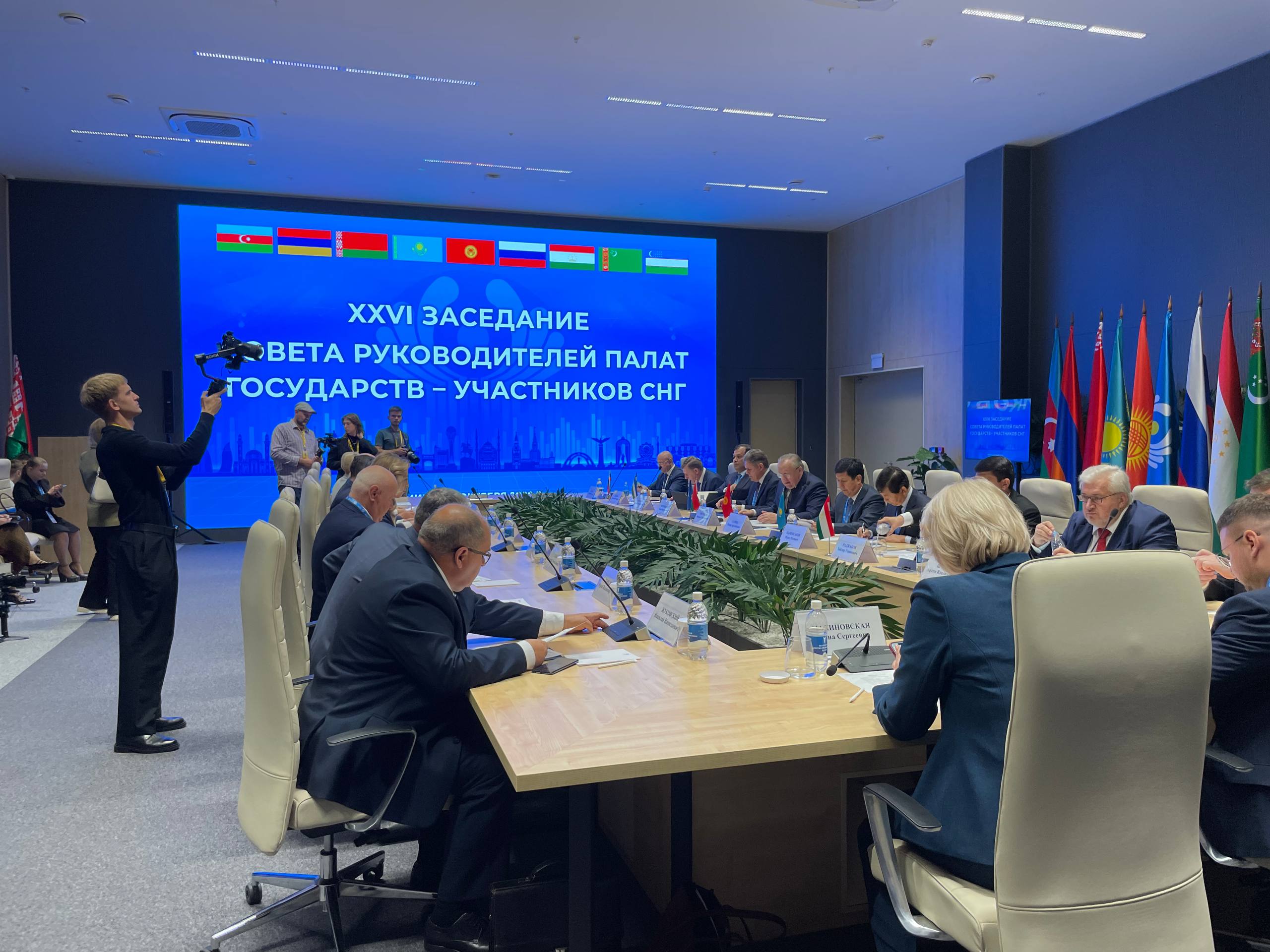
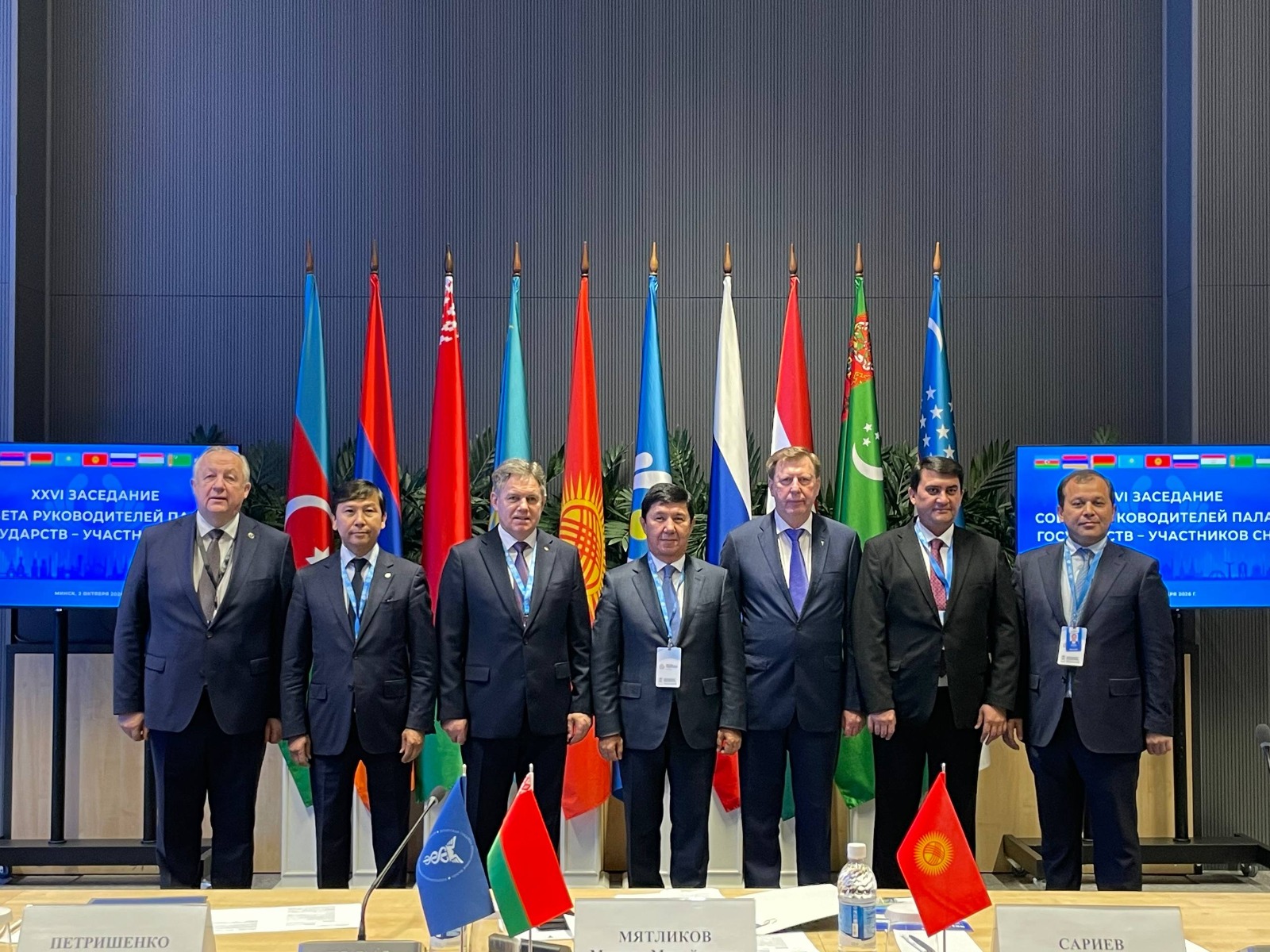
On 2 October 2026, Minsk hosted the 26th meeting of the Council of Heads of Chambers of CIS Member States. The Chamber of International Commerce of Kazakhstan (KazCIC) was represented by its Chairman of the Board, Murat Karimsakov. The meeting took place as part of the second INNOPROM. Belarus International Industrial Exhibition.
Participants included Mikhail Myatlikov, Chairman of the Belarusian Chamber of Commerce and Industry; Igor Petrishenko, First Deputy Secretary General of the CIS; Temir Sariev, President of the Chamber of Commerce and Industry of the Kyrgyz Republic; Sergey Katyrin, President of the Chamber of Commerce and Industry of the Russian Federation; Davron Vakhabov, Chairman of the Chamber of Commerce and Industry of Uzbekistan; and representatives of relevant organisations.
The discussions focused on expanding cooperation between chambers in congress and exhibition activities, technology transfer, industrial tourism and subcontracting, the use of electronic systems to verify the origin of goods, and the opportunities offered by the Interstate Bank to support economic cooperation.
Speaking at the meeting, Murat Karimsakov noted that, as international production and logistics chains undergo restructuring, chambers play an increasingly important role in supporting businesses, identifying reliable partners and reducing risks in foreign economic activities.
“Our common task is to ensure that trust between the heads of chambers translates into actual contracts, jobs and increased trade between our countries,” Murat Karimsakov stressed.
The Chairman of the Board of KazCIC outlined four priorities for further cooperation: deepening industrial cooperation, developing transport and logistics links, digitally integrating business services, and strengthening interregional B2B engagement. In industrial cooperation, the Kazakh side proposed developing an “Inter-Chamber Industrial Cooperation Map”, a unified register of companies’ production needs and available capacity. This tool would help businesses identify partners for manufacturing components and placing orders. Another proposal was to identify 10–15 priority cooperation projects and explore financing arrangements with the involvement of development institutions and the Interstate Bank.
Particular attention was paid to transport connectivity between CIS countries. Murat Karimsakov highlighted the need for joint efforts to remove constraints at border crossings, optimise customs procedures and develop multimodal transport along the North–South and East–West corridors and the Trans-Caspian International Transport Route. Proposals included regular joint assessments of border infrastructure, a transition to the electronic exchange of road transport permits, and the development of preferential through rail tariffs for cargo shipped under industrial cooperation projects.
As part of the digital agenda, KazCIC proposed exchanging experience in developing electronic services and synchronising chambers’ registers. In particular, it presented an initiative to establish a unified database for verifying certificates of origin issued in CIS countries, using secure QR codes and electronic digital signatures. It also proposed exploring the mutual recognition of electronic signatures to simplify the processing of foreign trade documents.
In congress and exhibition activities, the Kazakh side advocated creating a unified digital calendar of CIS events and offering preferential participation terms to companies from Commonwealth countries. Particular emphasis was placed on organising sector-specific B2B missions in regional industrial centres, arranging technical visits to enterprises, and developing a digital subcontracting platform connecting buyers with component manufacturers.
Discussing the opportunities offered by the Interstate Bank, KazCIC proposed exploring settlement and guarantee services and pre-export financing for small and medium-sized enterprises involved in cooperative supply arrangements. These mechanisms could facilitate settlements in national currencies and reduce contractual risks. Murat Karimsakov also shared KazCIC’s experience of bilateral cooperation with chambers in CIS countries. Examples included the work of the Kazakhstan–Russia Business Council, industrial cooperation with Uzbekistan, collaboration with Kyrgyzstan on cross-border logistics, and engagement with Azerbaijan along the Trans-Caspian route.
The meeting also highlighted the outcomes of the Kazakhstan–Belarus Business Council meeting held in Minsk on 1 October. Its programme focused on increasing production localisation, developing component manufacturing and jointly entering third-country markets.
 311
311